China Coil Leveling Machine Manufacturer
Mar 16, 2026
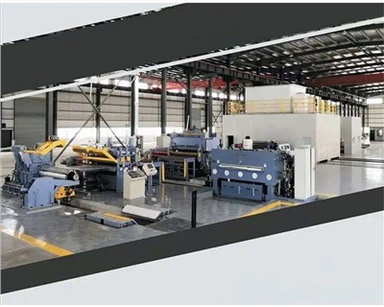
Hello, I am Silas Huang, founder of Shanghai HOYO Industries Co., Ltd With more than 20 years of experience in the metal coil cut-to-length production line industry, our company has grown to become one of China's leading professional manufacturers of metal coil cut-to-length lines. Today, we focus on providing global customers with complete metal cutting and processing line solutions.
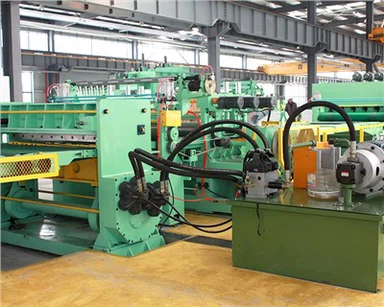
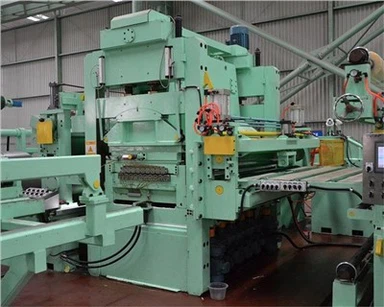
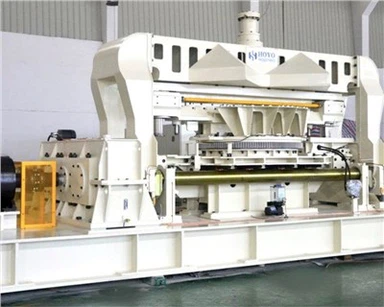
As the core unit of the production line, a Coil Leveling Machine plays a pivotal role, with its performance directly affecting the quality of the finished product. Here, we briefly outline its operating principle and the key parameters for adjustment.
What Is the Main Function of a Leveling Machine?
In a coil cut-to-length line, the primary function of a leveling machine is to flatten the metal coil and fully release its internal stress. Without proper leveling, the internal stress may redistribute during downstream processes such as laser cutting, punching, or welding, which can cause the sheet to develop edge waves, distortion, or warping, ultimately leading to dimensional deviations in the finished parts.

Core Working Principle of a Roller Leveling Machine
1. Repeated Bending Through Multiple Rollers
The metal coil passes through a series of leveling rollers arranged in alternating upper and lower positions. As the sheet moves through each pair of rollers, it is bent in the opposite direction repeatedly. The bending magnitude gradually decreases from the entry side to the exit side, forming a pattern similar to a gradually dampening sine wave.
2. Progressive Yielding
Under sufficient bending moment, the outer layers of the metal exceed their yield strength first and enter the plastic deformation zone, while the inner layers remain within the elastic range.
3. Elastic Recovery to a Neutral State
When the sheet exits the final roller, only a very thin elastic layer remains capable of springback. The areas that have undergone plastic deformation no longer rebound. As a result, the residual stress across the entire sheet is effectively redistributed and leveled out, leaving the sheet flat in its overall form.
Coil Leveling Machine Key Adjustable Parameters
Reduction (Roll Penetration)
The reduction setting is determined based on the material thickness and yield strength. The entry rollers typically apply a larger reduction to eliminate major waves, while the subsequent rollers gradually decrease the reduction for fine leveling. If the reduction is too small, the leveling effect will be insufficient; if it is too large, it may cause roll marks or secondary waviness.
Roll Pitch (Roll Spacing)
The spacing between rollers must match the material thickness. Smaller roll spacing results in a smaller bending radius and improves the machine's ability to correct fine waviness. Adjusting the roll pitch is therefore a key method for resolving wave defects.
Tension Control
The tension between the uncoiler and recoiler must remain stable and properly balanced. For example, the unit tension at the uncoiler can be calculated at approximately 25 MPa, with an adjustment range controlled within ±15%. Stable tension helps prevent sheet deviation and deformation during processing.
Operating Speed
Thick plates require lower speeds with higher torque, while thinner materials can run at higher speeds. The operating speed should be coordinated with other parameters such as tension and roll reduction.
Temperature Management
The temperature of the steel coil before entering the machine should be controlled below 40 °C, with a maximum not exceeding 70 °C, to avoid plate shape defects.

Operation and Maintenance Guidelines
Pre-Loading Inspection
Before feeding material into the line, inspect the sheet surface to ensure there are no foreign objects such as adhesive tape, packing straps, or other debris that could damage the leveling rollers.
Roll Surface Condition
The work rolls should be free of defects such as indentation marks, scratches, or material buildup. The diameter difference between the upper and lower work rolls should be kept within 0.02 mm. Clean the roll surfaces regularly and apply proper lubrication to prevent debris accumulation that may cause pressure marks on the sheet.
Regular Inspection and Replacement
Use feeler gauges to periodically check the consistency of the roll gap. If the wear on a single roll exceeds 0.05 mm, it should be replaced or reconditioned promptly. When the production schedule changes (for example, switching from narrow strips to wider material), the work rolls must also be replaced accordingly.
Shutdown Maintenance
If the machine will be shut down for more than 8 hours, the upper roll assembly should be lifted to prevent the rollers from remaining under constant pressure, which could lead to deformation over time.
How to Verify That Your Coil Has Been Properly Leveled
Straightedge + Feeler Gauge
A traditional yet intuitive method for checking flatness.
I-unit Laser Scanning
This system converts the high and low points across the entire sheet into a color-coded contour map, making any warping or unevenness immediately visible.
We use an inspection unit equipped with integrated laser scanning technology capable of high-precision data acquisition and real-time visual output. Compared with the traditional straightedge and feeler gauge method, this solution enables rapid, full-surface flatness evaluation of steel plates while reducing manual measurement.
X-ray Residual Stress Analyzer
This instrument measures surface lattice distortion and provides a quantified reading of the remaining stress level.
Based on the principle of X-ray diffraction, the analyzer detects changes in the spacing of the material's crystal lattice to determine the stress state. It can quickly measure residual stress on both the surface and near-surface layers. When combined with technologies such as laser scanning, it provides continuous and precise stress data for coil leveling machines. This allows engineers to dynamically adjust leveling parameters, preventing over-leveling that may cause roll marks or microcracks, while improving both product quality and production efficiency.
Common Misconceptions: Coil Leveling ≠ Simply Flattening the Coil
"The more pressure applied, the better."
Excessive plastic deformation can leave roll marks on the surface and may even lead to microcracks.
"Level it once and it's good forever."
After processes such as high-temperature welding or additional slitting, internal stresses can reappear, making secondary leveling necessary.
"Thin sheets don't need leveling."
Although thin materials typically have lower residual stress, even 0.5 mm of edge warp can be enough to cause part rejection in precision processes such as laser cutting.


If you would like to learn more about Coil Leveler or discuss specific application needs, feel free to contact me by email or by scanning the QR code. I would be happy to provide you with a one-stop solution tailored to your requirements.
The above is my overview and analysis of the Coil Leveler. It is not simply a "flattening machine," but rather a "stress rewriter." Through precisely controlled bending and measurable springback, it gradually redistributes the invisible internal stress within the metal, smoothing out that hidden stress map step by step. This creates a true "zero-baseline" flat surface, providing a stable foundation for every downstream process-whether cutting, bending, or welding.
In addition to coil leveling machines, we also offer
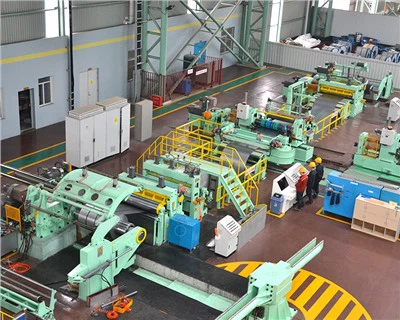
Slitting Lines

Cut To Length Line

Blanking Lines

Grinding and Polishing Lines