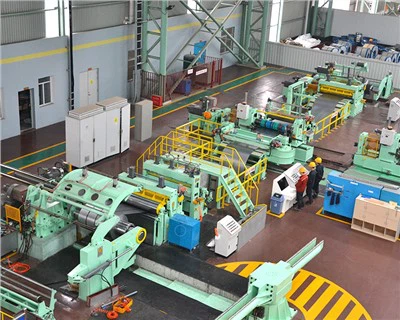
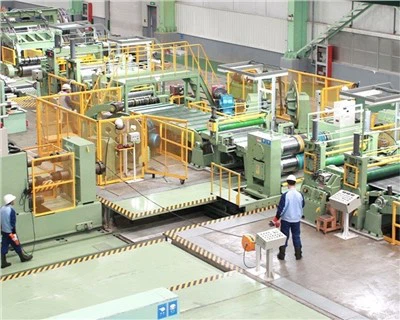
Cut To Length Line
The cut-to-length line has become an indispensable equipment in metal sheet processing via its three core capabilities: high-precision feeding, intelligent control, and efficient shearing. Its value is not only reflected in improving production efficiency and material utilization, but also lies in providing a reliable foundation for downstream stamping, welding, assembly, and other processes via standardized output. With the penetration of Industry 4.0 technology, the cut-to-length line is expected to further integrate advanced functions such as AI visual inspection and digital twin optimization, promoting the metal processing industry to upgrade toward intelligent and flexible development directions.

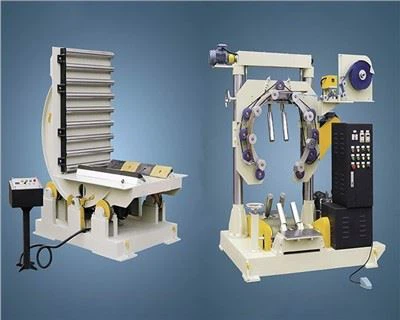
Precise control: The feeding system is driven by a servo motor and equipped with a high-resolution encoder or laser rangefinder. The feeding length tolerance can be controlled within ±0.1mm (high-end models), meeting stringent requirements of the automotive, electronics and other industries for sheet size.
Excellent edge quality: The hydraulic or mechanical shearing system optimizes the blade gap, and the edges of sheared sheets are smooth and burr-free, reducing the need for subsequent grinding or secondary processing.
High-speed operation: The automated assembly line design can achieve a shearing speed of 60-120 sheets per minute (depending on the material thickness), which is 5-10 times more efficient than traditional manual shearing.
Unmanned operation: The full process of automatic unwinding, feeding, shearing, and stacking is integrated to reduce manual intervention and support 24-hour continuous production.
Intelligent parameter management: The PLC or industrial computer system supports multiple sets of parameter presets, and one-click switching of different specifications (such as length and thickness) shortens the production changeover time to a few minutes.
Dynamic adaptability: Some models are equipped with an automatic thickness detection system, which can adjust the cutting parameters in real time to adapt to subtle fluctuations in material thickness.
Material compatibility: It can process a variety of metal materials such as carbon steel, stainless steel, aluminum alloy, copper plates, etc., with a thickness range of 0.3-20mm (depending on the equipment model).
Special processing capabilities: It supports slitting of laminated boards and coated boards, and the shearing process does not damage the surface protective layer.
Energy consumption optimization: variable frequency drive technology can dynamically adjust the motor power based on load, and the energy consumption is reduced by 20%-30% compared with traditional equipment.
Waste recycling: The integrated waste edge collection device automatically compacts and recycles metal waste, and the material utilization rate is increased by 3%-5%, reducing resource waste.
Precise stacking: Equipped with a pneumatic or mechanical stacking system, the plates are automatically aligned, counted, and layered, and the stacking neatness error is less than 1 mm.
Seamless connection production line: It can be linked with enable or robotic arm to realize automatic transfer of plates after shearing, and improve the overall intelligence level of the production line.
Common types
1. Hydraulic cut-to-length line
1. Hydraulic cut-to-length line
Core technology:
Use hydraulic drive to drive the upper and lower cutting dies to complete the shearing, and adjust the hydraulic pressure to adapt to different material thicknesses (usually 0.5-20mm).
Advantages:
High shearing force, suitable for thick plates (such as steel plates above 10mm);
Stable operation, low maintenance cost.
Disadvantages:
High energy consumption;
Thin plates (<1mm) are prone to burrs when sheared.
Application scenarios:
Building steel structures, shipbuilding, heavy machinery plate processing.
2. Mechanical cut-to-length line
Core technology:
Mechanical stamping and shearing are achieved through crank-connecting rod mechanism, with faster speed (up to 150 times/minute).
Advantages:
High shearing accuracy (±0.1mm), suitable for thin plates (0.3-3mm);
Lower energy consumption than hydraulic type.
Disadvantages:
Poor adaptability to ultra-thick plates (>6mm);
High noise.
Application scenarios:
Household appliance housings, automotive stamping parts, packaging containers (such as can blanks).
3. Laser Cutting Line
Core Technology:
Integrated high-power laser (CO₂ or optical fiber), cutting is completed by melting the material through a focused beam.
Advantages:
Contactless cutting, burr-free edges, accuracy of ±0.05mm;
Supports complex shape cutting (such as special-shaped holes, curved edges).
Disadvantages:
High equipment investment;
Special treatment is required for reflective materials (such as copper and aluminum).
Application scenarios:
Precision electronic components, aerospace titanium alloy plates, and high-end decorative materials.
4. Plasma Cutting Line
Core Technology:
Use high-temperature plasma arc to melt materials, and blow away slag with high-speed airflow.
Advantages:
Can cut high-hardness materials (such as stainless steel and alloy steel);
Lower cost than laser cutting.
Disadvantages:
The cutting surface is rough and requires secondary processing;
Low accuracy (±0.5mm).
Application scenarios:
Engineering machinery thick plates, mining equipment accessories, and rough-processed blanks.
Classification by degree of automation
1.Fully automatic fixed length cutting line
Core abilities:
The whole process of assembling, shipping, cutting, and stacking;
Supports AI monitoring and self-adjustment.
Number of technical participants:
Speed: 80-120 pieces/min;
Localization accuracy: ±0.1mm.
Applicable scene:
High-precision demanding fields such as automobile manufacturing and new energy battery installations.
2.Semi-automatic fixed length cutting line
Core abilities:
Manual material handling/loading, automatic cutting, and basic structural design;
Easy-to-deploy PLC control system.
Number of technical participants:
Speed: 30-60 pieces/min;
Positioning accuracy: ±0.3mm.
Applicable scene:
Small and medium-sized metal processing workshops, standardized equipment production fields.
3. Manual cut-to-length line
Core capabilities:
Completely dependent on artificial operation, non-automatic shipping system;
Mechanical construction, Narimoto low.
Number of technical participants:
Speed: <20 pieces/min;
Localization accuracy: ±1mm.
Applicable scene:
Small and medium-sized metal processing workshops, standardized equipment production fields.
Material
Characteristics:
Moderate hardness, good ductility, low cost, and it is the most basic processing material.
Processing difficulties:
Shearing force should be adjusted according to thickness (thick plates require large-tonnage hydraulic shears) to prevent burrs or tool wear.
Typical applications:
Cold-rolled plates: automobile body plates, home appliance shells;
Hot-rolled plates: building structural parts, container plates;
Galvanized plates: roof plates, ventilation ducts.
Stainless steel
Features:
Strong corrosion resistance, high hardness (e.g., austenitic grades 304 and 316L), and a pronounced tendency to work harden.
Processing difficulties:
High-hardness tools (e.g., carbide) are required, and shearing speed must be controlled to prevent blade cracking;
Coolant is required for thick plates (>3 mm).
Typical applications:
Food-grade stainless steel: kitchen utensils, medical equipment;
Industrial-grade stainless steel: chemical reactors, ship accessories.
Features:
Lightweight, good conductivity, but soft texture (e.g., 1-series pure aluminum); some alloys (e.g., 6061-T6) exhibit high strength.
Processing difficulties:
Thin plates (0.3–1 mm) are prone to sticking to the blade, requiring coated blades;
Aluminum chips must be cleaned promptly after shearing to prevent oxidation from contaminating the surface.
Typical applications:
Electronic products: mobile phone mid-frames, heat sinks;
Transportation sector: aircraft fuselage skin, high-speed rail body panels.
Copper and Copper Alloys
Features:
Excellent electrical/thermal conductivity and strong ductility (e.g., T2 pure copper); brass (H62) exhibits high wear resistance.
Processing difficulties:
Prone to curling during shearing, requiring optimization of tool gap;
Thin copper foil (<0.1 mm) requires precise tension control to avoid breakage.
Typical applications:
Electrical components: copper foil for circuit boards, transformer windings;
Hardware products: locks, bathroom accessories.
Zinc and zinc alloys:
Used as substrates for galvanized steel strips and zinc plates in batteries. Shearing temperature must be controlled to prevent oxidation of the zinc layer.
Titanium and titanium alloys:
High strength and light weight (e.g., Ti-6Al-4V); a low shearing speed is required to reduce tool wear, making them suitable for aerospace components.
Nickel alloys:
High temperature resistance (e.g., Inconel 718), applied to pole pieces of new energy batteries and chemical equipment.
Application
Metal processing
Cut-to-length lines are widely used in metal sheet processing, particularly for materials like steel, aluminum alloys, and copper. These lines can cut long strips or large coils of metal sheets into precise sizes as required, meeting the needs of downstream processing or direct application. For instance, in the steel industry, cut-to-length lines process large coils of steel sheets into specific sizes to facilitate subsequent operations like stamping and bending.
01
Plastics and film industry
In the plastic and film industry, cut-to-length lines are used to slit roll films and plastic sheets into standard sizes, widely applied in packaging material production. Particularly in the production of high-precision plastic films, these lines ensure flat and damage-free cut surfaces, enhancing both the product's appearance quality and subsequent performance.
02
Paper products industry
In the paper and paper products industry, cut-to-length lines are used to slit large paper or paperboard rolls into specified lengths, facilitating subsequent printing, packaging, and other processes. The dimensional accuracy of these papers directly impacts both the quality and performance of the finished products. Cut-to-length lines effectively enhance production efficiency while ensuring cutting accuracy.
03
Textile industry
Cut-to-length lines also play a crucial role in the textile industry, particularly for slitting large fabric rolls into specified lengths. By accurately controlling cutting length and speed, these lines ensure that fabric is cut to customer-specified sizes, reducing waste and improving production efficiency.
04
Electronics and photovoltaic industry
In the electronics and photovoltaic industries, cut-to-length lines precisely slit various films, photovoltaic module materials, and more. These industries demand extremely high cutting precision. These lines ensure the flatness and precision of cut materials, safeguarding product performance and quality.
05
Precautions for use
Cutting Precision:
Understand the cutting precision and allowable error range of the cut-to-length line. Different materials and thicknesses demand varying precision levels. Accurate cutting is critical for ensuring product quality.
Operating Speed:
The operating speed of the cut-to-length line impacts production efficiency. Speed must be adjusted based on material type and cutting specifications to prevent quality issues caused by excessive or insufficient speed.
Material Compatibility:
Different cut-to-length lines are designed for specific materials (e.g., metals, plastics, paper). Prior to operation, verify that the equipment is compatible with the material being processed.
Operator Training:
Ensure all operators undergo professional training to be familiar with the equipment's operating procedures, safety protocols, and emergency response measures.
Personal Protection:
When operating a cut-to-length line, operators must wear appropriate PPE (e.g., safety goggles, gloves) to prevent operational injuries.
Emergency Stop Device (E-stop):
Cut-to-length lines are typically equipped with emergency stop devices (E-stops). Operators must be proficient in using E-stops to address sudden malfunctions or hazardous situations.
Regular Inspection and Cleaning:
Regularly inspect the shearing line's tools, transmission system, and electrical control system to ensure normal equipment operation. Clean dust and impurities from the equipment to prevent them from compromising cutting precision or causing equipment malfunctions.
Tool Wear:
Shearing tools will gradually wear down during operation. Regularly inspect tool wear and replace or re-sharpen tools as needed to maintain optimal cutting performance.
Lubrication System:
Regularly monitor oil level and quality in the lubrication system to ensure proper lubrication of all moving parts, minimize wear, and extend equipment lifespan.
Material Docking and Discharge:
Ensure materials are properly docked and discharged prior to shearing to prevent equipment jams or damage caused by improper material stacking.
Temperature Control:
For certain materials (e.g., metals), heat generation may occur during shearing. During operation, monitor and control temperature to prevent overheating from compromising material properties or damaging equipment components.
Shearing Sequence and Discharge Method:
Based on material characteristics and product specifications, reasonably plan the shearing sequence and discharge method to minimize waste and enhance production efficiency.
Components
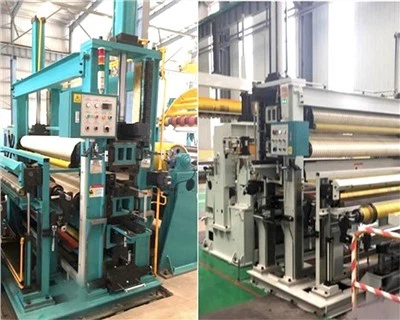
The unwinder unwinds rolled material and feeds it into the shearing line. It is typically driven by an electric motor system. The unwinder's tension control system ensures stable material tension during unwinding, preventing wrinkles or uneven stretching. Common unwinder types include single-reel and double-reel models.
The tension control system ensures consistent material tension during the shearing process. It monitors material tension in real time via tension sensors and automatically adjusts the unwinder, drive system, or tension control devices to prevent issues arising from uneven material tension. The tension control system typically consists of tension sensors, controllers, drive motors, and other components.
The leveler straightens the unwound coil and eliminates surface waviness or curling. This is because most coils develop ripples or unevenness during winding. The leveler corrects the material via a series of rollers or pressure systems to ensure no deformation during shearing. Common leveling methods include mechanical and hydraulic types.
The cut-to-length machine is the core of a cut-to-length line, used to precisely cut flattened material to a predetermined length. Common cutting methods include:
Shearing machine: Commonly used for metal materials, it cuts material to the required length via the shearing action of upper and lower blades.
Sawing machine: Uses tools like circular saws or band saws, cutting materials with rotating saw blades.
Laser cutting: Suitable for precision cutting, it uses laser beams to cut materials with high precision, though typically applied to thin plates or special materials.
The stacker is a component designed to collect cut materials. It typically features multiple brackets or conveyor belts to sort cut materials into stacks and facilitate neat product stacking. Modern stackers often incorporate automatic sorting systems to sort materials by different product specifications.
In some specialized production lines, a recoiler may be used to rewind excess material into coils for subsequent processing. While not typical in standard cut-to-length lines, a recoiler can effectively enhance material utilization for specific applications.
The control system of a cut-to-length line is typically based on a PLC (Programmable Logic Controller). Combined with a touch screen or computer interface, it allows operators to set parameters like cutting length, speed, and tension. Modern control systems can further enable automatic operation, minimizing manual intervention while enhancing both production efficiency and accuracy.
Guide rollers are components that direct material flow into the shear. They utilize a series of rollers or guiding devices to prevent material deviation as it enters the cutting zone, ensuring precise cuts during shearing.
Waste or scraps may be generated during the shearing process. The waste collection system automatically collects and removes such debris to maintain a clean work environment and enhance material utilization efficiency. Common waste collection methods include air blowing, mechanical scraping, and more.
The hydraulic system primarily provides pressure support during equipment operation, particularly for driving shears, levelers, and tension control systems. It delivers high-power driving force to ensure the stability and precision of the shearing process.
Compare with other products
Enhanced Automation
New products may incorporate automated control systems to enable automatic cut-length setting and precise cutting, minimizing manual intervention while boosting production efficiency.
Enhanced Production Precision
Leveraging advanced technology, shearing process errors can be significantly reduced, leading to higher precision, more stable product quality, and compliance with stricter production standards.
Minimized Material Waste
An efficient control system accurately calculates and adjusts the shearing position to minimize raw material waste.
Improved Operability
New products may feature more intuitive interfaces and operating procedures, resulting in reduced operator training costs and fewer human-error-induced production failures.
FAQ
Q: What is cut to length?
A: Cut to length is a process in which materials are cut to a predetermined length, typically applied to metals, plastics, paper, etc., to ensure that the dimensions of each cut piece meet the requirements for subsequent production.
Q: What are the applications of cut to length?
A: Cut-to-Length is widely applied in manufacturing sectors such as steel processing, paper manufacturing, plastic processing, etc., ensuring consistent dimensions of produced materials, enhancing production efficiency, and reducing waste.
Q: What are the main advantages of cut to length?
A: Improving Production Efficiency
Cut-to-Length enables rapid and efficient cutting, reducing manual operation time by minimizing human intervention.
Minimizing Material Waste
It ensures each cut piece meets exact dimensional specifications, eliminating unnecessary material waste through precise sizing.
Ensuring Dimensional Consistency
All cut pieces feature uniform length, streamlining subsequent processing by reducing variations in downstream operations.
Q: How is cut to length different from other cutting methods?
A: Cut-to-Length (CTL) refers to precision cutting to specified lengths, whereas methods like panel cutting or strip slitting prioritize shape or width over length consistency-making CTL ideal for applications requiring exact dimensional accuracy.
Q: How to ensure cutting accuracy when cutting to length?
A: The key to ensuring cut-to-length (CTL) cutting accuracy lies in equipment quality and commissioning. High-precision shears, coupled with regular maintenance of cutters and equipment, sustain cutting precision. Additionally, feedstock quality and measurement system accuracy are critical contributing factors.
Q: What are the precautions for cut to length?
A: Material Selection Considerations
Different materials impose distinct cutting requirements-select cutting methods and tools based on material properties (e.g., hardness, thickness, ductility).
Equipment Maintenance Protocols
Implement regular maintenance and calibration of cutting equipment to sustain optimal performance and dimensional accuracy.
Safety Operation Guidelines
Adhere strictly to safety protocols during cut-to-length operations to prevent accidents or injuries from improper handling.